
Happy Tuesday, Golfers,
We often spend a considerable amount of time preparing for a game or tournament, both physically and emotionally, but how often do we take time for a post-round reflection?
Too often, a single hole or bad score can define how we feel about the entire day. But if we look a little deeper, there is usually far more to take away, both positives and lessons, that can help us improve going forward.

Over Generalising
When emotion leads the post-round narrative, perspective disappears.
“I played awful today.” ”My golf is the worst it’s ever been.” ”I can’t believe how bad I am at putting.” ”Wow, did I drive it badly today.”
We have all said things like this after a round, but these are emotional reactions rather than accurate reflections. If we looked back more objectively, we would probably find that some things did go well. Maybe your putting looked poor because your approach shots left you 50 feet away all day.
Maybe you hit driver on holes where a long iron would have been the smarter play. Or perhaps a couple of unforced errors triggered frustration that turned a mediocre round into a bad one.
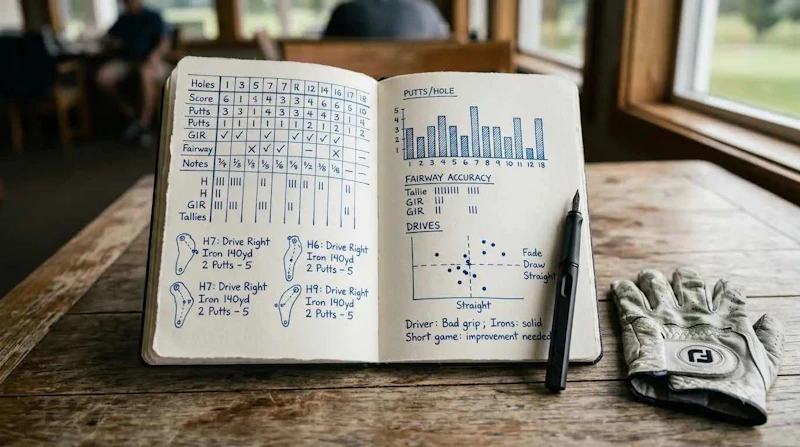
Recording Your Stats
It is easy to record your stats after a good round, but how often do you track them when you have had a poor one? This is where the real value lies. Recording data, even from the tough rounds, helps you identify trends and patterns over time.
You do not need to be overly detailed — start simple:
- Greens in Regulation
- Penalties from the tee
- Number of three-putts
- Shots from inside 30 yards
The key is consistency. Build the habit of reflection and record-keeping, no matter how you played.

Asking Yourself the Right Questions
A good reflection session involves asking the right questions:
- What was my shot of the day?
- What are three things I did well today?
- How could I have scored better with what I had today?
- What is one thing I learned from this round?
- What can I do better next time?
And dig a little deeper:
- How was my strategy?
- Did my emotions affect my decisions?
- Was my routine consistent?
- Did I play with too many swing thoughts?
- What was the real cause of my misses: ball striking, face control, or alignment?
Do not let emotion define your perception of performance. Reflect with clarity and use the lessons from every round, good or bad, as fuel to become a better golfer.
Both success and struggle leave clues!
– Coach Tim

Leave a Reply